Interface Architecture & Conversion Systems
Deconstructing why most SaaS landing pages fail to convey substance: the balance between narrative typography, structural proof, and high-velocity clarity.
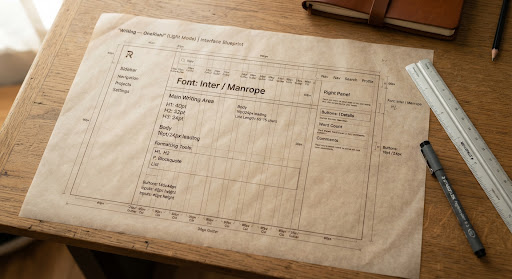
Most B2B software websites fail not because their underlying software is deficient, but because their digital storefronts are designed like loud billboards rather than deliberate instruments of clarity.
When a technical founder or buyer lands on a modern software page, they are immediately assaulted by generic floating 3D gradients, nebulous promises of "revolutionary synergy," and an urgent plea to book a thirty-minute demo with an aggressive sales development representative.
Within four seconds, the prospective buyer has already closed the tab.
The Three Structural Defects of Modern Web Interfaces
To engineer high-converting B2B web experiences that earn respect from discerning buyers, we must address three pervasive failure modes:
1. Abstract Platitudes in Place of Verifiable Mechanics
Technical buyers evaluate products through their architecture. When a landing page refuses to show high-resolution product screenshots, API response payloads, or code snippets, it signals that the underlying tool is vaporware.
Clarity is the ultimate conversion lever. Replace vague assertions with authentic interface demonstrations and deterministic data schemas.
2. Bloated Client Runtimes and Layout Instability
Nothing communicates operational negligence faster than a website that stutters during scrolling. A landing page burdened with twenty megabytes of uncompressed JavaScript libraries, client-side animations, and tracking pixels destroys user trust before a single paragraph is digested.
High conversion begins with sub-100ms First Contentful Paint and zero layout shift. Speed is not a secondary technical luxury; it is the baseline prerequisite for respect.
3. Decorative Fluff Over Information Architecture
Every element on the screen should serve the visitor's investigative journey. When typography is treated as an afterthought and copy is squeezed into generic cookie-cutter cards, the narrative dissolves.
By anchoring your page to an intentional typographic grid, clear reading hierarchy, and prominent visual proof, you convert passive visitors into engaged champions.

Related Dispatches
View all entries arrow_forwardAudience Mechanics in Practice
Scaling a digital channel to 94,000+ members without paid acquisition requires an obsession with query intent, packaging tension, and editorial resonance.
Decentralized Newsroom Stewardship
In an era of hyper-centralized programmatic platforms, grassroots local reporting gives young writers true agency. Notes on cultivating trust, distributed newsrooms, and sustaining independent collectives.